Epidemiology and symptoms
A high fever between 39 and 40 °C, with chills, sweating, deterioration of the general condition and abdominal or lumbar pain, are all signs pointing towards acute pyelonephritis. In a lower urinary tract infection or cystitis, the clinical presentation in children remains limited to bladder signs.
Clinical definition
We distinguish between higher urinary tract infections (acute pyelonephritis, involvement of the renal parenchyma, at risk of kidney scarring) and lower urinary tract infections (cystitis, limited to the bladder).
A fever high at 39–40 °C, chills, sweating, altered general condition, and abdominal or lumbar pain point to acute pyelonephritis.
In case of low urinary tract infection or cystitis, clinical signs are limited to bladder symptoms.
Checklist of symptoms to look for
Alert: urgent medical opinion
In febrile infants under 3 months of age, any suspicion of urinary tract infection requires immediate hospital evaluation. Never start antibiotic therapy without prior urine sampling.
Confirmation of the diagnosis
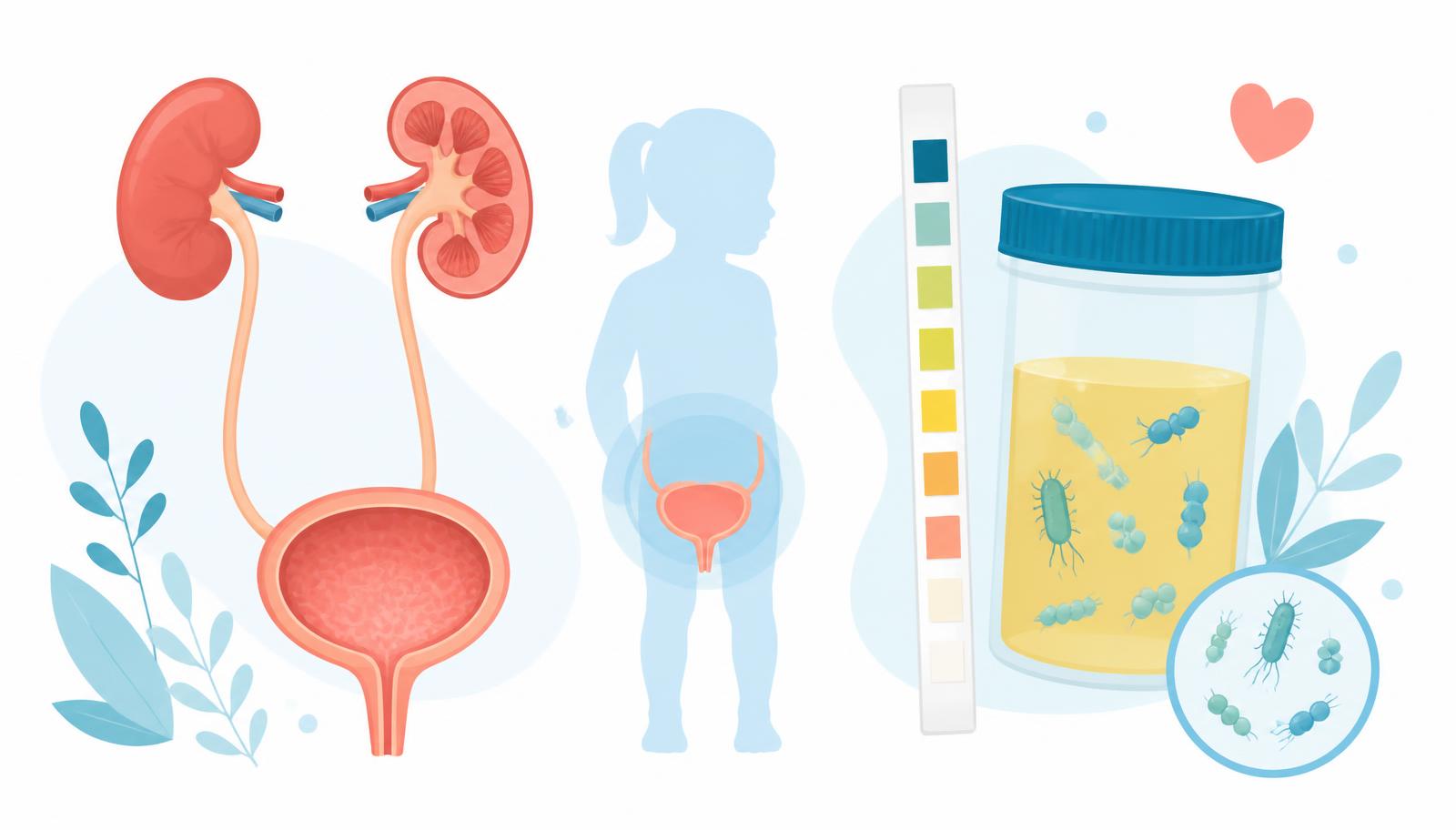
We start with a urine test on the dipstick, looking for nitrites and leukocyturia. When these two tests are negative, the negative predictive value is close to 98%; the positive predictive value is lower, around 75%.
If the test strip is positive, it is essential to systematically carry out a cytobacteriological examination of urine (ECBU) with antibiogram in order to confirm the urinary tract infection.
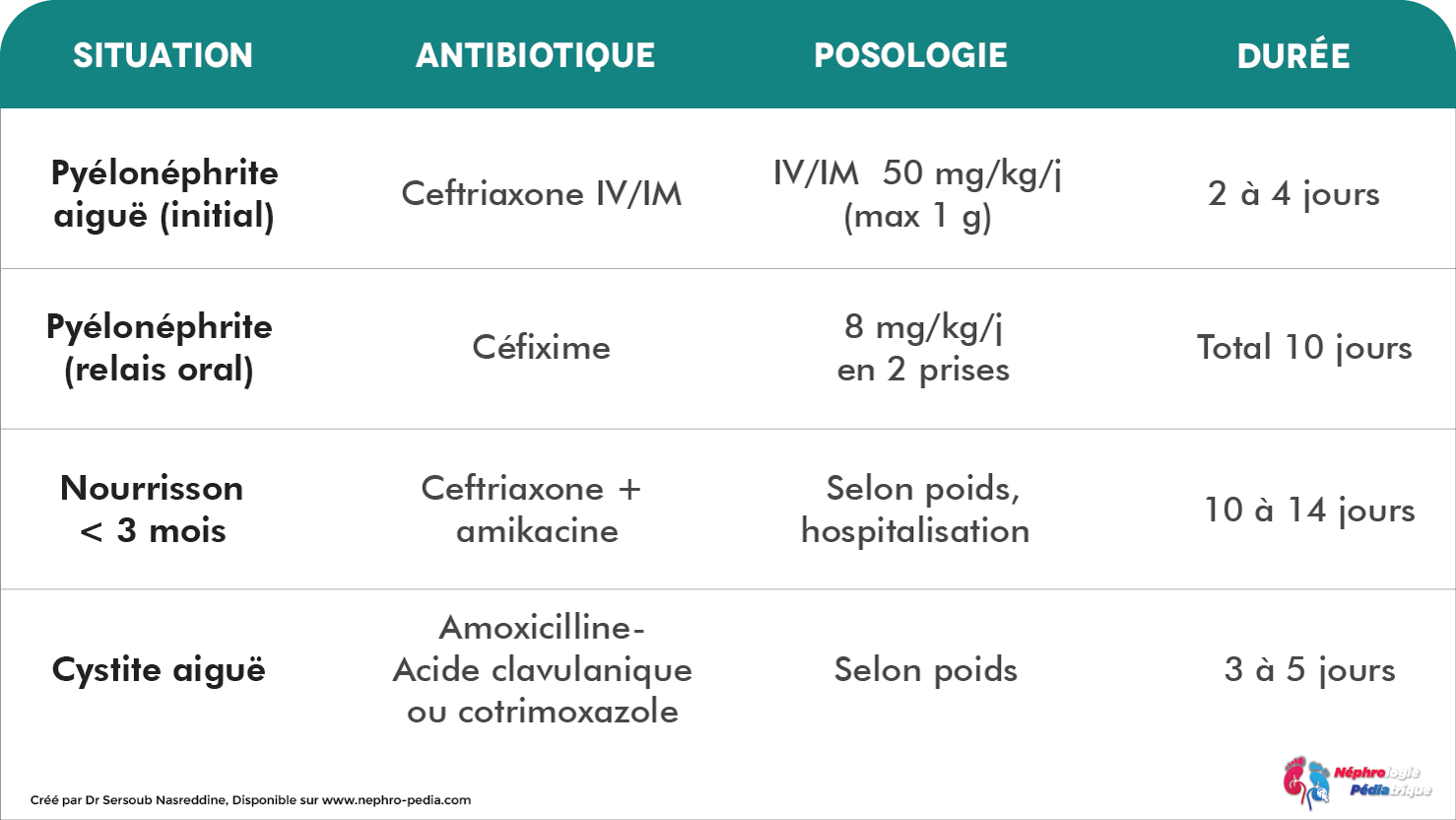
Antibiotic treatment
(figure at the bottom)
Antibiotic treatment should be started immediately after confirmation of the diagnosis, without waiting for identification of the germ or susceptibility testing.
The initial choice of antibiotic therapy is guided by knowledge of the resistance profile of the most frequently observed urinary germs in the region.
The treatment is then adapted to the direct bacteriological examination of urine and the result of antibiogram.
Monitoring and adaptation
Regardless of the initial treatment—and even more so if it is an oral treatment—it is necessary to retrieve the antibiogram result as quickly as possible in order to adapt the treatment within 36 to 48 hours at the latest in case of resistant strains.
An ultrasound of the urinary tract is recommended after a first episode of acute pyelonephritis in infants, seeking underlying uropathy.
This guide presents the most recent recommendations issued by the Paediatric Infectious Pathology Group (PGIP) for the treatment of urinary tract infections in children.